
The Journal
Speed blur surf photography: the shutter ladder from 1/100 down
By Tommy Pierucki, Waikiki. July 7, 2026.
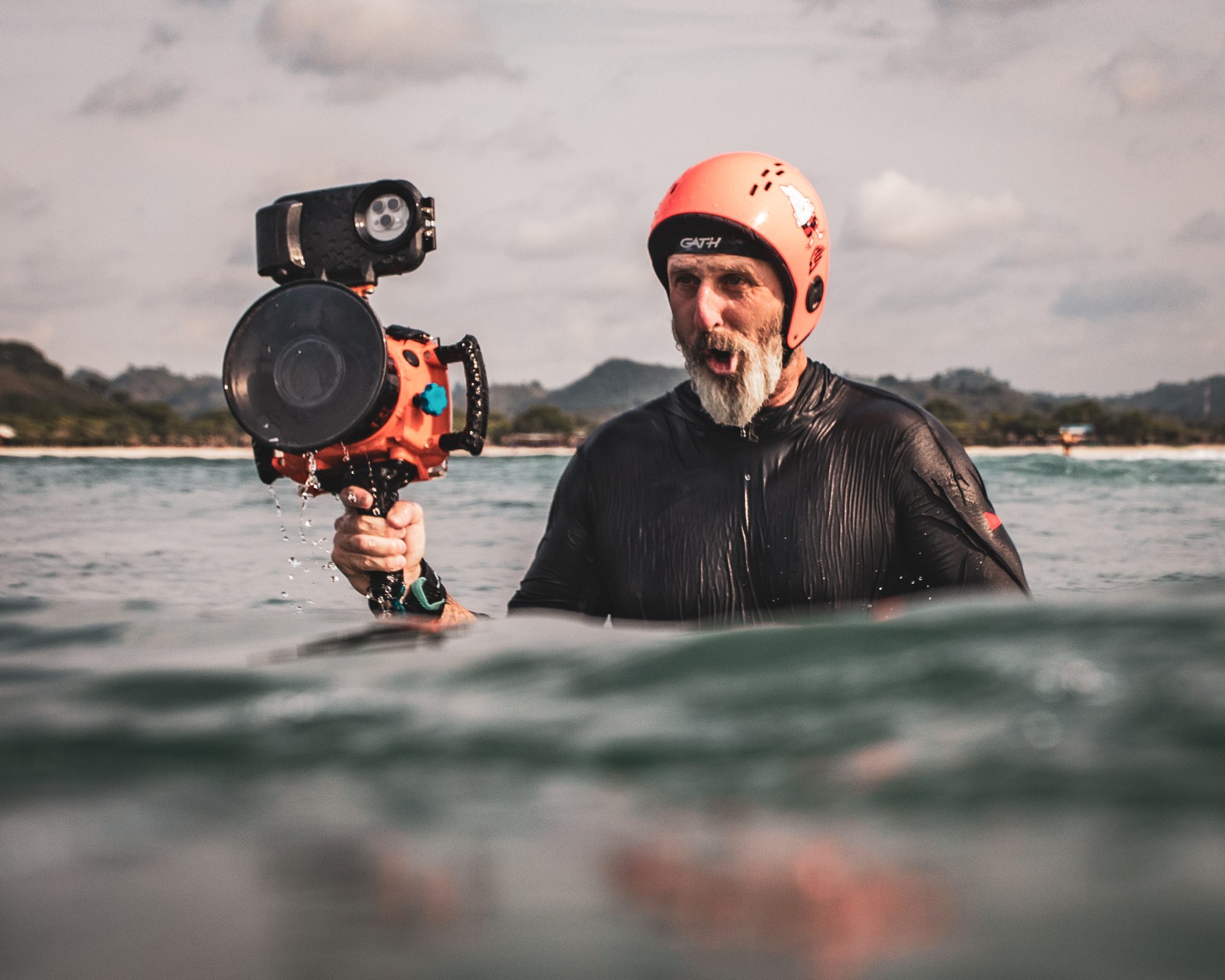
Everything I've written about camera settings tells you to shoot fast. 1/1250 and faster, freeze the spray, get sharp. This article is about deliberately breaking that rule, because a speed blur, when it lands, does something a frozen frame can't. The water streaks, the background smears into color, and the surfer hangs in the middle of it, unmistakably moving.
The catch is the failure rate. Speed blur is a low percentage game even when you know what you're doing, and a total lottery when you don't. What separates the two isn't luck. It's working down a ladder instead of jumping off a cliff.
What a speed blur actually is
You're panning. The camera tracks the surfer's movement during a slow exposure, so the surfer stays relatively still against your sensor while everything that isn't moving with them streaks in the direction of travel. The photo reads as speed because it literally recorded it.
Two skills stack here: a smooth pan that matches the surfer's speed, and a shutter slow enough to streak but not so slow that even a good pan can't hold the subject. That second variable is the ladder.
The ladder
If you're new to this, start around 1/100 or 1/80. That's slow enough for visible motion in the water and background, but forgiving enough that a decent pan holds the surfer usable. Stay on that rung until keepers are normal instead of lucky, then work your way down as you get better.
I really like 1/25, but that's me, and I've had lots of practice. These days I live around 1/25 or slower. And 1/15 is very slow and honestly difficult, even from the water, so treat that end of the ladder as a long term goal rather than a starting point.
Don't skip rungs, because the pan that holds a subject at 1/60 is built at 1/100, and there's no shortcut past building it.
Pick the right day for it
Speed is an intention you choose before you swim, not something you improvise mid session. When I decide a session is about speed, I also want waves with a long clean face, because a long wall gives the surfer room to draw a line worth streaking and gives your pan time to settle into their speed. A short crumbly closeout gives you nothing to track.
One intention per swim. If today is the speed day, it's the speed day. Mixing fast coverage and slow blurs one frame at a time means doing both badly.
The settings, in order
Center point focus. Pick your shutter speed first, because that's the whole point of the session. Then set the aperture to expose properly, and in bright sun you'll be stopping well down because a slow shutter floods you with light. ISO goes to its floor.
From there, the whole game is keeping your subject inside that center focus square as the surfer passes.
Aim at the hips
This is the most useful thing in this article. When you pan, your center point and your attention go on the surfer's hips, because the hips are the center of the body and they don't move much compared to a hand or a foot. Arms swing, heads turn, the board chatters over the water. The hips travel the truest line down the wave. Match your pan to the hips and the core of the surfer holds while the extremities blur, which reads as motion. Match your pan to a swinging arm and everything smears.
This one adjustment converts more failed pans than any shutter choice. Hips. Every time.
Expectations, and why the misses are fine
You'll miss a lot of shots. Sometimes the misses still look great, because blur is forgiving in ways sharpness isn't, and a frame that's technically failed can still feel exactly like the wave did. The ones you nail are always worth it.
A good speed blur session might produce two frames you love. That's not failure, that's the format. You're trading keeper rate for a kind of photo that stops people scrolling precisely because it can't be faked cheaply or often.
So: start at 1/100 or 1/80. Earn your way slower, one rung at a time. Center point on the hips. Long clean faces. Delete without mercy, and keep the beautiful accidents.
Finishing the shot
Two next steps from here. The speed blur method lives inside the In-Water Technique Guide alongside everything that sets it up: the intention system that decides your speed days, positioning for a clean pan, and the full settings chapter. My camera settings article covers the fast shutter world this article deliberately breaks from, and it's worth reading first if you haven't.
And speed blurs, more than any other surf photo, come alive in the edit, because the streaks carry the color. I've written up how I edit for my water color separately. The TP presets are the same starting points I finish my own work from, and a blur frame is where they pay off most. Shoot the ladder, then finish the frame.